"What's round and red and grows at the South Pole? A tomato!"
So begins my latest Antarctica article (and probably the last for a little while) South Pole Greenhouse Proves Bountiful, published in the Washington Post's KidsPost a few weeks ago. Enjoy!
Thursday, February 24, 2011

Saturday, September 18, 2010
Latest article: Observing weather at the Pole
 It's been a while, eh? Antarctic winter will officially be over next Wednesday, September 22, while we in the Northern Hemisphere will experience autumnal equinox -- the first day of fall. The sun will rise at the South Pole for the first time since mid-March. And let me tell you, the staff will be happy to see it!
My latest Antarctica article, Observing Weather at the Bottom of the World: The South Pole, covers the "why behind the Antarctic sky" and takes a look at how meteorologists monitor weather in such a remote and extreme location. It was published last week in the Sept/Oct issue of Weatherwise magazine. This article was particularly fun to write: I got to geek out about weather for 5,000 words straight! The Antarctic atmosphere is amazing. Take a look for yourself and post any questions or comments you have below.
Cheers,
Ann
Thursday, July 29, 2010
NEEM ice core reaches Greenland bedrock
Last week, my travel partner to Antarctica, meteorologist Dan Satterfield, traveled to another icy part of the world: Greenland. He's reporting on the North Greenland Eemian Ice Drilling (NEEM) project - the Arctic equivalent of Antarctica's WAIS Divide core. The NEEM ice core will give an accurate account of the Northern Hemisphere's temperature up to 120,000 years ago, before the last ice age. This week, the NEEM team finished drilling the core and reached Greenland's bedrock a mile below the surface.
Read more and watch the video below to learn about NEEM and ice cores. Follow Dan's reports at www.wildwildscience.com and on Facebook.
Read more and watch the video below to learn about NEEM and ice cores. Follow Dan's reports at www.wildwildscience.com and on Facebook.
Saturday, July 3, 2010
West Antarctic Ice Sheet Divide -- Earth's Climate History Hidden in Ice
Crazy 'bout ice cores
Last week, meteorologist Dan Satterfield and I presented about Antarctic science and our trip at the American Meteorological Society's (AMS) 38th Conference on Broadcast Meteorology in Miami. The slide show, videos, photos and content are all freely available online for use in education/outreach efforts or for your learning purposes (credit www.earthgauge.net).
Among other things we and another speaker, Joseph Souney, covered is the West Antarctic Ice Sheet (WAIS, pronounced 'wayss') Divide ice core drilling project. Joe works in the project's Science Coordination Office based out of the University of New Hampshire.
 A back-lit snow pit showing annual layers of snowfall accumulation on the West Antarctic Ice Sheet over the past few years. The darker thick layers are winter snowfall, the lighter thick layers are summer snowfall. Photo by Julie Palais, courtesy of National Science Foundation.
Although Dan and I did not have a chance to visit the field site in January, we are both dedicated to spreading the word about this major study. I encourage you to learn more through the project's website and videos. In addition, I created a fact sheet fact sheet for distribution through Earth Gauge and at AMS. Here's the gist:
What is an ice core?
An ice core is a cylindrical sample of deep ice taken from Antarctica, Greenland or other locations in high mountain glaciers. Glaciologists retrieve cores in order to analyze gases from ancient air bubbles trapped within the ice, as well as [the ice itself], in order to understand Earth’s past climate ...
Analyzing the core
Scientists analyze gases from the air bubbles, such as carbon dioxide, methane and other greenhouse gases. In addition, they measure sea salt and trace elements such as lead trapped in the ice (in Greenland ice cores, lead has been a useful indication of human impact, since it is expelled by the burning of fossil fuels). They also measure hydrogen isotopes from melted ice to determine the atmospheric temperature at the time of snowfall, and oxygen isotopes to reveal humidity. This information is then entered into climate models to show the relationship between temperature and gases over thousands of years ...

The significance of the WAIS core
The WAIS Divide ice core has the highest time resolution of any core ever extracted on Earth. The study will provide the most detailed record of greenhouse gases -- including carbon dioxide -- ever measured for the past 100,000 years of Earth’s climate history. Scientists will be able to determine annual data for the past 40,000 years by analyzing the electrical properties and chemistry of the ice cores, which vary seasonally. They also date the cores by identifying volcanic ash layers from known eruptions (the photo above shows an ash layer in the left segment of a core; copyright Chaz Firestone) ...
Download the full document.
Other WAIS Divide materials from fellow Antarctic journalists:
Last week, meteorologist Dan Satterfield and I presented about Antarctic science and our trip at the American Meteorological Society's (AMS) 38th Conference on Broadcast Meteorology in Miami. The slide show, videos, photos and content are all freely available online for use in education/outreach efforts or for your learning purposes (credit www.earthgauge.net).
Among other things we and another speaker, Joseph Souney, covered is the West Antarctic Ice Sheet (WAIS, pronounced 'wayss') Divide ice core drilling project. Joe works in the project's Science Coordination Office based out of the University of New Hampshire.
 A back-lit snow pit showing annual layers of snowfall accumulation on the West Antarctic Ice Sheet over the past few years. The darker thick layers are winter snowfall, the lighter thick layers are summer snowfall. Photo by Julie Palais, courtesy of National Science Foundation.
Although Dan and I did not have a chance to visit the field site in January, we are both dedicated to spreading the word about this major study. I encourage you to learn more through the project's website and videos. In addition, I created a fact sheet fact sheet for distribution through Earth Gauge and at AMS. Here's the gist:
What is an ice core?
An ice core is a cylindrical sample of deep ice taken from Antarctica, Greenland or other locations in high mountain glaciers. Glaciologists retrieve cores in order to analyze gases from ancient air bubbles trapped within the ice, as well as [the ice itself], in order to understand Earth’s past climate ...
Analyzing the core
Scientists analyze gases from the air bubbles, such as carbon dioxide, methane and other greenhouse gases. In addition, they measure sea salt and trace elements such as lead trapped in the ice (in Greenland ice cores, lead has been a useful indication of human impact, since it is expelled by the burning of fossil fuels). They also measure hydrogen isotopes from melted ice to determine the atmospheric temperature at the time of snowfall, and oxygen isotopes to reveal humidity. This information is then entered into climate models to show the relationship between temperature and gases over thousands of years ...

The significance of the WAIS core
The WAIS Divide ice core has the highest time resolution of any core ever extracted on Earth. The study will provide the most detailed record of greenhouse gases -- including carbon dioxide -- ever measured for the past 100,000 years of Earth’s climate history. Scientists will be able to determine annual data for the past 40,000 years by analyzing the electrical properties and chemistry of the ice cores, which vary seasonally. They also date the cores by identifying volcanic ash layers from known eruptions (the photo above shows an ash layer in the left segment of a core; copyright Chaz Firestone) ...
Download the full document.
Other WAIS Divide materials from fellow Antarctic journalists:
- Unearthing Cold, Hard Facts by Robert Lee Hotz, published on May 29, 2010 in the Wall Street Journal (also check out the video)
- Icy Hunt for Old Air by Chaz Firestone, published on January 27, 2010 in the journal Nature (see accompanying photo gallery)
Tuesday, June 22, 2010
Longest day for us, midwinter for Antarctica

As the world turns, our summer solstice and longest day of the year yesterday in the Northern Hemisphere was a true turning point -- and cause for celebration -- at the South Pole and other stations around Antarctica: midwinter, the day in which the sun is at its lowest point on the horizon (either way, it's still dark!). Only three more months until the sun rises.
Midwinter is a true accomplishment for those spending six months in darkness, and a unifying event at a time when they are otherwise isolated from each other by a cold, vast desert of ice. South Pole meteorology manager Tim Markle recently said in an email to me: "Well, we are quickly approaching mid-winter. Soon sunlight will appear on the horizon and we will have light at the end of the tunnel."
The image above is a midwinter greeting from U.S. McMurdo Station. The two below are from Amundsen-Scott South Pole Station and Palmer Station, respectively.


Best of luck on the remainder of the season, everyone.
Photos courtesy of the U.S. Antarctic Program, National Science Foundation.
More information about midwinter in Antarctica.
Monday, June 21, 2010
The arugula salad and chili were the best!
Some of you may be wondering how and what people eat on an continent where the only soil is buried under two miles of ice and the sun does not shine for six months out of the year. Here's a piece by fellow Antarctic journalist and friend Chaz Firestone about growing -- and eating -- food in Antarctica: Frozen Foodies. My favorites: the arugula salad at the South Pole and the AMAZING chili made by Karen Moore at Marble Point in the Dry Valleys.
Friday, June 11, 2010
"Mysterious Mountains" and Warmest Year
 I've been absent from the blog lately, but I'll have a few more materials trickling in this summer. Nonetheless, polar science and outreach remain strong throughout the year. Here's some recent news:
--Mysterious Mountains Hidden Beneath Antarctic Ice Revealed at the International Polar Year Oslo Science Conference happening this week (the things that get me the most are the liquid lakes that lie beneath a one- to two-mile thick ice sheet).
--South Pole Has Warmest Year on Record
(On a related note, read my Q&A with South Pole meteorologist Tim Markle. Tim recently experienced temperatures below -100 degrees Fahrenheit in April, which is very early in the year for the Pole to be that cold; 2009 was also Earth's second warmest year on record.)
Dan Satterfield and I are also presenting about Antarctic science at the American Meteorological Society's 38th Conference on Broadcast Meteorology in two weeks. Should be fun! More soon ...
Tuesday, April 13, 2010
Pee bottles, Penguins in The Washington Post
My article on environmental awareness in Antarctica was published today in the Health & Science section of The Washington Post today. Check it out!
Guarding Antarctic Ecosystems: Antarctic researchers ease the impact of scientific activity on pristine environment
Other features:
--Sidebar: Measured by carbon footprint, travel to Antarctica has tons of impact
--Photo gallery: Antarctica's pristine nature
Let me know what you think by posting a comment or question below.
Guarding Antarctic Ecosystems: Antarctic researchers ease the impact of scientific activity on pristine environment
Other features:
--Sidebar: Measured by carbon footprint, travel to Antarctica has tons of impact
--Photo gallery: Antarctica's pristine nature
Let me know what you think by posting a comment or question below.
Thursday, April 8, 2010
New video: Ann's Antarctic Adventure!
I've been working on a video summarizing my trip in January -- including science and travels -- for the past several weeks, and I've finally finished it. Check it out!
Questions or comments? Please leave them below.
Questions or comments? Please leave them below.
Tuesday, March 23, 2010
Sunset at the South Pole

Sunset at the South Pole, March 22, 2010. Thanks to Nick Morgan of the National Oceanic and Atmospheric Administration for sharing this photo!
A day-long sunset took place at the South Pole this past weekend, which will result in six months of darkness for the 47 crew members who are wintering over. The sun will not rise again until late September. I've written two short blog posts about it on Earth Gauge and Capital Weather Gang.
Good luck to the South Pole staff and scientists this winter!
Wednesday, March 17, 2010
New material from fellow Antarctic journalist
Glenn Zorpette, executive editor of IEEE Spectrum, was one of the seven journalists selected for the media expedition in January. He and his team have produced a great two-part audio slide show based on our trip: Antarctic Odyssey (part one), South Pole Sojourn (part two). Well done, and worth a watch!
A few other recent news items to note:
Southern Ocean winds open window to the deep sea
Surprise shrimp under Antarctic ice
Is Antarctica falling apart?
A few other recent news items to note:
Southern Ocean winds open window to the deep sea
Surprise shrimp under Antarctic ice
Is Antarctica falling apart?
Monday, March 8, 2010
Two new videos from the South Pole
Dan Satterfield has a new video up about the Ice Cube neutrino project on his blog.
In addition, I posted a new video about South Pole weather and climate to the Earth Gauge in Antarctica and Capital Weather Gang blogs last week, featuring an interview with my former colleague and current meteorology manager Tim Markle.
P.S. - Please excuse our amateur video skills!
In addition, I posted a new video about South Pole weather and climate to the Earth Gauge in Antarctica and Capital Weather Gang blogs last week, featuring an interview with my former colleague and current meteorology manager Tim Markle.
P.S. - Please excuse our amateur video skills!
Tuesday, March 2, 2010
"Science on the Ice" broadcast on WHNT-TV
Since our return from Antarctica, my travel partner meteorologist Dan Satterfield and his team at WHNT-TV in Huntsville, Alabama, have been working hard on a special report called Science on the Ice about our trip. The first two segments aired last night. Watch them here.
The videos accurately portray our amazement at the experience, in addition to the exciting science going on there. They sure bring back good memories.
Great job, Dan and team!
The videos accurately portray our amazement at the experience, in addition to the exciting science going on there. They sure bring back good memories.
Great job, Dan and team!
Tomatoes at the South Pole ... and on the moon?
Nope, I'm not kidding. There are tomatoes growing at the South Pole as we speak, surrounded by thousands of miles of ice. Could they also grow on the moon? Scientists are studying the South Pole greenhouse to find out. Here is my latest post on the Earth Gauge in Antarctica blog:
------
------

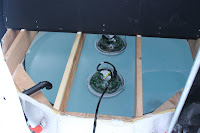
South Pole Greenhouse Feeds Winter Crew, Simulates Lunar Chamber
At the bottom of the Earth, atop a land mass covered with a two mile-thick slab of ice, sits the Amundsen-Scott South Pole Station where 40 to 60 people live and work during each long, dark, bitter-cold winter. On the first floor of the station, near the end of hallway is a small greenhouse. Since 2005, this remotely-operated chamber has provided countless fresh vegetables, light and humidity to over 200 winter-over staff and scientists who have spent Southern Hemisphere winters at the coldest, darkest place on Earth. The growth chamber will feed crew members again this winter.
Lane Patterson manages the South Pole greenhouse from his office at the University of Arizona, with help from a team of horticulturalists and engineers. “Through a computer and camera, I’m able to access the chamber and assist with questions that the operator might have,” he said. The chamber grows edible plants in a soil-less hydroponics system of nutrient-rich water; cantaloupe, tomatoes, peppers, cucumbers, chives fresh herbs, leafy green vegetables like kale and lettuce, sunflowers, nasturtiums and other edibles thrive here throughout the year. Patterson can control the conditions inside the chamber, including temperature, light and even the hydroponic solution in which the plants grow. He communicates remotely with an assistant who maintains the greenhouse in-person at the Pole, and visits once every year or so to check on it.
The chamber provides other benefits besides nutritious vegetables. “It provides us with bright light in the dark winter. It provides us with high humidity in the dry environment. It provides us with a green environment — something that we miss for the eight months of being isolated as a researcher or someone who supports a researcher here at the South Pole.”
Staff also enjoy going into the chamber to read, relax or hang out with others. Some even reserve the room for dinner dates (there is a small table and couch in the foyer to the chamber). A humid environment, even if in a small chamber, is a welcome relief for chapped lips and dry skin. Relative humidity at the South Pole is in the single digits; in the chamber, it’s 60 percent. In addition, each staff member is allowed only two showers per week, each two minutes long. The Station’s water supply is low and conservation is important: using water requires ice to be melted. But, the benefit of using water for plant growth outweigh the use of energy to melt it.
“The growth chamber is really a big ‘growbot’ — it’s a robot that grow things,” said Patterson. It requires about 140 liters of water, sequesters about one kilogram of carbon dioxide and uses about 281 kilowatt hours of energy (equivalent to eight gallons of gasoline) per day. In turn, it produces about half a kilogram of oxygen and six kilograms of biomass (raw plant matter) each day.
The South Pole greenhouse is similar to another of Patterson’s projects at the University of Arizona’s Controlled Environment Agriculture Center: the lunar greenhouse. The South Pole project analyzes air revitalization in a remote environment that could help future greenhouse projects in space. “We’re looking at using plants to revitalize the air that a person breathes. We’re asking the questions: How many plants do you need? How much photosynthesis do you have to have? What are the resources that are needed to cycle the amount of oxygen a person breathes daily? … How it relates to the South Pole is that a Bioregenerative Life Support System on the moon, say, would be a place that if it used BLSS, it would be isolated, it would be a station with a small crew in a very dangerous environment. And that’s what the South Pole is,” Patterson said.
To learn more about the project and view photos, visit http://ag.arizona.edu/CEAC.
Saturday, February 20, 2010
The Strangest Telescope on Earth: Ice Cube
What, exactly, does the South Pole's IceCube project do? The short answer is that it determines the origin of the Universe. The long answer is much more complicated. Dan Satterfield wrote a very good piece last week about the IceCube Neutrino Observatory in about as plain English as possible. Here's Dan's description ("The Strangest Telescope on Earth -- Ice Cube") and the very thorough IceCube Web site from the University of Wisconsin, as well as some photos below, to help you understand this very unique and important study that can happen nowhere else on Earth.




Saturday, February 6, 2010
Record-breaking weather: Washington D.C. and Mount Washington
 While this post will not be about Antarctica, it is about the reasons I haven't written about Antarctica in many days. They both have to do with weather records. First, there is somewhere close to TWO FEET of snow sitting outside of my window in Washington, D.C. right now. After two smaller snowstorms last week, the so-called Snowmageddon storm yesterday and today brought record-breaking accumulations to the region. Since I write for Capital Weather Gang, The Washington Post's weather blog, things have been a little, well, nuts this week. In an exciting way though! Luckily, there was a lot of hype about this storm, so many people were prepared and stayed safe. Unfortunately, there were also many accidents and power outages. The city will no doubt be digging out for days. This is our second double-digit snowstorm in the past 7 weeks, which is a lot for this city.
Next, other alumni of the Mount Washington Observatory and I found out last week that the mountain's world record wind speed was replaced (how on Earth can you replace something as special and long-lived as that, you wonder? Well, in our hearts it can't be replaced. But read on to find out how it can be with science...). Fourteen years ago -- yes, as in over a decade ago -- a very strong typhoon (same as a hurricane in the Atlantic) passed over Australia, and a ground wind speed of 253 mph was recorded by an automatic weather station on Barrows Island. Meteorologists who observed this knew that it could be a record-breaker, but the paperwork went unnoticed by the World Meteorological Organization until a few years ago. Only last week did they confirm that this, indeed, beat Mount Washington's 231 mph record recorded back in 1934 and that the instrument that recorded it was valid. Although we were skeptical at first, Andrew Freedman and I said farewell to the world record wind on Capital Weather in the proper way.
So, no new Antarctica materials. However, I'll have something posted again soon. Thanks for your patience!
*Whew, what a winter.*
Monday, February 1, 2010
Video: "Best of" Adélie Penguins
Back after popular demand ... the Adélies! Featured on their home "stage" of sea ice near Cape Royds colony, Ross Island, Antarctica.
(Turn up the sound near the end to hear thousands of penguins chatting with each other at the colony. Oh, and you can ignore the clicks of the "penguin paparazzi" - aka, my fellow journalists in red parkas with cameras in their hands.)
Adélie penguins are quite social creatures (you may have noticed they are always wearing tuxedos). They have no natural land predators, so they get quite curious about humans. It is illegal for people to approach, touch, harm or remove any wildlife from Antarctica, but that did not stop the stars themselves from coming up close to check us out!
(Turn up the sound near the end to hear thousands of penguins chatting with each other at the colony. Oh, and you can ignore the clicks of the "penguin paparazzi" - aka, my fellow journalists in red parkas with cameras in their hands.)
Adélie penguins are quite social creatures (you may have noticed they are always wearing tuxedos). They have no natural land predators, so they get quite curious about humans. It is illegal for people to approach, touch, harm or remove any wildlife from Antarctica, but that did not stop the stars themselves from coming up close to check us out!
Sunday, January 31, 2010
Happy the Cactus: Why my desert mascot did not survive in Antarctica
 Arizona is a desert. Antarctica is the world's largest desert. So why wasn't Happy the saguaro cactus, my desert mascot, able to survive in Antarctica?
(Disclaimer: For those of you worried about invasive species, as the U.S. Antarctic Program is -- and rightfully should be -- don't worry, Happy was not real.)
The saguaro (pronounced sah-WAR-o) cactus is the largest cactus species in the Unites States, and it is endemic to the Sonoran desert of the Southwest U.S. and northern Mexico, living nowhere else in the world. Like other desert plants, it is very well-adapted to dry conditions. Saguaros live to be very old, and only begin growing 'arms' after they are 50 or so. They flower once per year in May or June. Here is my first picture of Happy, with a younger saguaro in my father's front yard outside of Phoenix.
 Though it is covered with a 1 to 2 mile-thick ice sheet, Antarctica is technically a desert. Ecologically speaking, a desert receives an average of less than 10 inches of precipitation per year. While McMurdo Sound on the Antarctic coast receive 6 or 7 inches of snowfall each year, interior parts receive far less. The South Pole, for example, gets less than 2 inches of measurable snowfall annually. Most of the time, it is just too cold to snow; any ice/snow crystals that fall end up sublimating, or changing directly to water vapor, before hitting the ground. The Pole also experiences a lot of blowing snow, which is very difficult to measure since it does not fall straight down.
So, as far as precipitation goes, Antarctica is definitely a desert. However, there is a major (and obvious) temperature difference between Antarctica and the deserts we are more familiar with, like Arizona. Antarctica is considered a cold (or polar) desert and can reach -120F; Arizona is a hot desert and can reach +120F. This, my friends, is why Happy did not survive more than 24 hours once reaching Antarctica. While Happy was used to dry climates, he was not used to sub-zero temperatures.
There are no flowering plants in Antarctica, with the exception of two species found the Antarctic Peninsula, the warmest part of the continent, close to South America. However, I brought him even further south. Perhaps I should have gone to the Peninsula instead?
Here are some other photos of our journey together:
 Getting ready to fly over the Pacific.
 At the top of the Christchurch Gondola in New Zealand, overlooking Lyttleton Harbor. Shackleton and Scott sailed out of this port during their Antarctic expeditions in the early 1900s.
 On the C-17 flight from Christchurch to McMurdo Station. This was the last photo I took of him before he disappeared.
Unfortunately, Happy went missing within a day of us reaching the ice. I guess he simply could not survive the cold. I was happy to have him accompany me on my journey there. I quickly learned that you can take a cactus out of the (hot) desert, but you can't transplant him to a polar desert and expect him to last.
Ironically, I am not the only one who has thought about a saguaro cactus while in Antarctica. Here is a painted saguaro I stumbled upon during my last morning at McMurdo.
 Farewell, Happy!
(P.S. - If you are reading this from McMurdo or South Pole Stations, please keep your eyes out for Happy -- I seriously lost him! He would most likely be huddled under blankets or in the pockets of Big Red, trying to keep warm.)
Ironically, I am not the only one who has thought about a saguaro cactus while in Antarctica. Here is a painted saguaro I stumbled upon during my last morning at McMurdo.
 Farewell, Happy!
(P.S. - If you are reading this from McMurdo or South Pole Stations, please keep your eyes out for Happy -- I seriously lost him! He would most likely be huddled under blankets or in the pockets of Big Red, trying to keep warm.)
Wednesday, January 27, 2010
'Icy hunt for old air' article
Quick announcement: Check out this article in Nature by fellow Antarctic journalist Chaz Firestone, who visited the West Antarctic Ice Sheet Divide ice core drilling project last week ... a well-written piece about a very, very important scientific study.
Monday, January 25, 2010
South Pole air video and a personal tour of the Pole
During our 24 hours at the South Pole two weeks ago, we toured most of the science projects going on there. I posted a new video interview and blog post for Earth Gauge today, Monitoring the Air at the South Pole, which includes highlights from my conversation with Nick Morgan, station chief at the South Pole Atmospheric Research Observatory (Update, 1/27: Also posted a Q&A on Capital Weather Gang). Check out Dan's new post, Science South of 60: Things About Antarctica That May Surprise You.
I will gradually upload more science content, but I also wanted to give you a personal account of what it was like to land at, stand at and sleep overnight at the Pole. In one word: exciting!
I will gradually upload more science content, but I also wanted to give you a personal account of what it was like to land at, stand at and sleep overnight at the Pole. In one word: exciting!
Subscribe to:
Posts (Atom)


